 English



HEK293 cells are widely used in the production of viral vectors for gene therapy, vaccine development, and recombinant protein expression. In early-stage research and small-scale production, the T75 flask remains one of the most practical and accessible tools for adherent cell culture.
This article explores how T75 flask can be effectively used in HEK293-based viral vector production, along with key considerations for optimizing performance.
Why HEK293 Cells Are Used for Viral Vector Production
HEK293 cells are a preferred host system due to their:
High transfection efficiency
Robust growth characteristics
Ability to produce high viral titers
They are commonly used for producing:
Adenoviral vectors
Lentiviral vectors
AAV (adeno-associated virus) vectors
Their adaptability makes them suitable for both research and early-stage development.
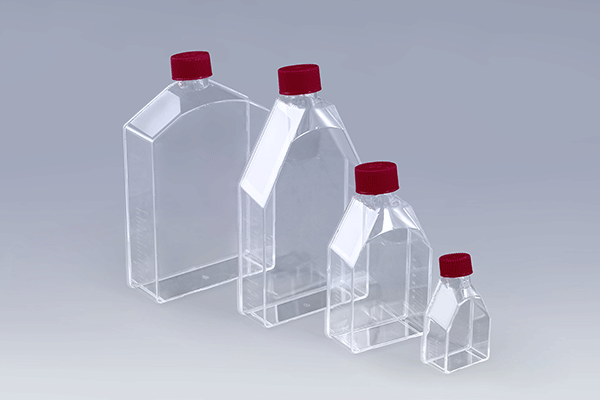
Advantages of Using T75 Flasks
T75 flasks provide approximately 75 cm² of growth surface, making them ideal for small- to medium-scale experiments.
Key benefits include:
1. Easy Handling
T75 flasks are simple to operate, making them suitable for routine lab workflows and transfection experiments.
2. Controlled Environment
They allow precise control of:
Cell seeding density
Media volume
Transfection timing
3. Cost-Effective for Early Development
Compared to larger systems, T75 flasks are economical and flexible, especially for:
Process optimization
Protocol development
Typical Workflow for Viral Vector Production
A standard HEK293-based viral vector production process using T75 flasks includes:
1. Cell Seeding
Seed HEK293 cells at appropriate density (typically 60–80% confluence before transfection)
2. Transfection
Introduce plasmids using chemical or physical transfection methods
Maintain optimal culture conditions for gene expression
3. Viral Production
Incubate cells for 48–72 hours post-transfection
Monitor cell health and morphology
4. Harvest
Collect supernatant (for secreted vectors like lentivirus/AAV)
Or harvest cells (for certain viral systems)
Key Factors Affecting Production Efficiency
Cell Health and Confluence
Over-confluent or under-seeded cells can reduce transfection efficiency
Maintaining consistent cell conditions is critical
Surface Quality of the Flask
TC-treated surfaces support better cell attachment and growth
Uniform surface treatment helps reduce variability
Media Volume
Typically 10–20 mL for T75 flasks
Excess media can reduce gas exchange
Sterility and Consistency
Using high-quality, sterile consumables minimizes contamination risk
Batch-to-batch consistency supports reproducibility
Limitations of T75 Flasks
While T75 flasks are useful, they have limitations:
Not suitable for large-scale production
Labor-intensive when scaling up
Limited surface area compared to multi-layer systems
For higher production demands, systems such as cell factories or bioreactors are typically used.
Scaling Up from T75 Flasks
T75 flasks are often used as a starting point before scaling up.
A typical scale-up pathway:
T25 → T75 → T175 flasks
Then transition to:
Cell factories
Roller bottles
Bioreactor systems
This stepwise approach helps optimize conditions before large-scale production.
Conclusion
T75 flasks play a critical role in HEK293-based viral vector production, particularly in early-stage research and process development.
They offer:
Flexibility
Ease of use
Cost efficiency
By optimizing key parameters such as cell density, media volume, and surface quality, researchers can achieve reliable and reproducible results before scaling up to larger systems.
About Our Cell Culture Flasks
We provide high-quality T-Flasks (T25, T75, T175,T225) designed for:
Stable cell attachment
High transparency for easy observation
Consistent performance across batches
Our products support biopharma companies, vaccine developers, and research laboratories in achieving reliable cell culture outcomes.
The FAI climbed 5.9 percent year-on-year in the first 11 months of 2018, quickening from the 5.7-percent growth in Jan-Oct, the National Bureau of Statistics (NBS) said Friday in an online statement.
The key indicator of investment, dubbed a major growth driver, hit the bottom in August and has since started to rebound steadily.
In the face of emerging economic challenges home and abroad, China has stepped up efforts to stabilize investment, in particular rolling out measures to motivate private investors and channel funds into infrastructure.
Friday's data showed private investment, accounting for more than 60 percent of the total FAI, expanded by a brisk 8.7 percent.
NBS spokesperson Mao Shengyong said funds into weak economic links registered rapid increases as investment in environmental protection and agriculture jumped 42 percent and 12.5 percent respectively, much faster than the average.
In breakdown, investment in high-tech and equipment manufacturing remained vigorous with 16.1-percent and 11.6-percent increases respectively in the first 11 months. Infrastructure investment gained 3.7 percent, staying flat. Investment in property development rose 9.7 percent, also unchanged.