 English



Vero cells are among the most widely used adherent cell lines in vaccine manufacturing. Their robust growth characteristics, susceptibility to viral infection, and long history of regulatory acceptance have made them a preferred platform for the production of both human and veterinary vaccines.
As vaccine demand continues to increase worldwide, efficient and scalable Vero cell expansion has become a critical step in upstream process development and commercial manufacturing.
This article explores the key considerations for expanding Vero cells for vaccine production and the role of Cell Factory systems in large-scale adherent cell culture.
Why Vero Cells Are Widely Used in Vaccine Manufacturing
Originally derived from African green monkey kidney cells, Vero cells have been extensively used for the production of viral vaccines due to their ability to support the replication of a wide range of viruses.
Vero cells are commonly used in the manufacture of:
Influenza vaccines
Rabies vaccines
Japanese encephalitis vaccines
Polio vaccines
Rotavirus vaccines
Veterinary viral vaccines
Their strong regulatory history and well-established culture characteristics make Vero cells a reliable platform for vaccine developers worldwide.
Challenges in Large-Scale Vero Cell Expansion
Because Vero cells are anchorage-dependent, they require sufficient surface area for attachment and proliferation.
As production scales increase, manufacturers often face challenges such as:
Maintaining uniform cell attachment
Achieving consistent cell density across culture vessels
Reducing labor-intensive handling procedures
Minimizing contamination risks during scale-up
Ensuring reproducible performance between batches
Selecting an appropriate culture platform is therefore essential for successful process development and commercial production.
 Cell Factory Systems for Vero Cell Expansion
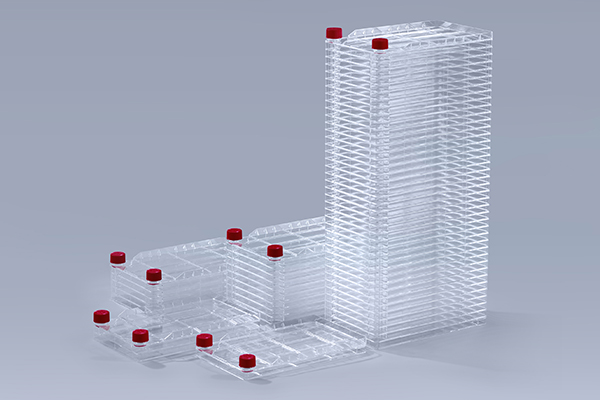
A Cell Factory provides a large culture surface within a compact footprint, making it an efficient solution for scaling up adherent cell cultures.
Compared with multiple T-flasks or roller bottles, a Multilayer Cell Factory offers:
Increased growth area
Improved space utilization
Reduced handling requirements
Simplified scale-up strategy
Lower contamination risk
These advantages make Cell Factory systems particularly suitable for vaccine manufacturing environments.
Typical Scale-Up Strategy for Vero Cells
Vero cell expansion is commonly performed using a stepwise seed train approach:
T25 Cell Culture Flask
T75 or T175 Cell Culture Flask
Roller Bottle or Small Cell Factory
10 Layer Cell Factory
40 Layer Cell Factory
Commercial Production
Maintaining consistent seeding density and culture conditions throughout the scale-up process helps improve reproducibility and reduce process variability.
Key Parameters for Successful Vero Cell Culture
Several process parameters can significantly influence Vero cell performance during expansion.
Surface Treatment
Uniform TC-treated surfaces support reliable cell attachment and spreading, which is essential for achieving high cell densities.
Seeding Density
Appropriate seeding density helps optimize growth kinetics and shorten time to confluence while avoiding excessive nutrient depletion.
Medium Volume and Feeding Strategy
Sufficient nutrient availability is critical for maintaining healthy cell growth during large-scale expansion.
Environmental Control
Stable temperature, CO₂ concentration, and humidity contribute to consistent culture performance and batch-to-batch reproducibility.
Advantages of Cell Factory Systems in Vaccine Production
For vaccine manufacturers, Cell Factory systems offer several operational benefits:
Scalable production capacity
Efficient use of incubator space
Compatibility with closed-system processing
Reduced labor requirements
Easier transition from process development to commercial manufacturing
These features have contributed to the widespread adoption of Cell Factory platforms in vaccine production facilities around the world.
Why Choose FDCell Cell Factory for Vero Cell Expansion
FDCell provides high-quality Cell Factory Systems designed to support large-scale adherent cell culture applications.
Key features include:
Uniform TC-treated surfaces for reliable cell attachment
Multiple configurations from 1-layer to 40-layer
Medical-grade polystyrene materials
Sterile, ready-to-use format
Compatibility with tubing assemblies and closed-system workflows
Consistent quality for biopharmaceutical manufacturing
FDCell Cell Factory products support vaccine manufacturers, CDMOs, research institutes, and biotechnology companies engaged in Vero cell culture and viral vaccine production.
Conclusion
Efficient Vero cell expansion is a fundamental requirement for modern vaccine manufacturing.
By combining optimized culture conditions with scalable Cell Factory systems, manufacturers can improve production efficiency, maintain process consistency, and support reliable vaccine supply.
As cell culture-based vaccine production continues to expand globally, Cell Factory technology will remain an important platform for large-scale Vero cell cultivation and upstream bioprocess development.
The FAI climbed 5.9 percent year-on-year in the first 11 months of 2018, quickening from the 5.7-percent growth in Jan-Oct, the National Bureau of Statistics (NBS) said Friday in an online statement.
The key indicator of investment, dubbed a major growth driver, hit the bottom in August and has since started to rebound steadily.
In the face of emerging economic challenges home and abroad, China has stepped up efforts to stabilize investment, in particular rolling out measures to motivate private investors and channel funds into infrastructure.
Friday's data showed private investment, accounting for more than 60 percent of the total FAI, expanded by a brisk 8.7 percent.
NBS spokesperson Mao Shengyong said funds into weak economic links registered rapid increases as investment in environmental protection and agriculture jumped 42 percent and 12.5 percent respectively, much faster than the average.
In breakdown, investment in high-tech and equipment manufacturing remained vigorous with 16.1-percent and 11.6-percent increases respectively in the first 11 months. Infrastructure investment gained 3.7 percent, staying flat. Investment in property development rose 9.7 percent, also unchanged.