



Today, with the rapid advancement of science and technology, cell culture technology is widely used in various scientific research fields such as cytology, immunology, and experimental medicine, assisting the research and development of various new vaccines and anti-tumor drugs. Cell culture requires a specific environment. Therefore, cell culture consumables, which are necessary containers, generally have the following characteristics:
1. High transparency: Commonly used raw materials for cell culture consumables include PC, PS (polystyrene), PETG, etc. These raw materials are highly transparent. This is because when culturing cells, it is necessary to observe their growth conditions and the capacity of the culture medium in a timely manner, so as to Make corresponding adjustments.
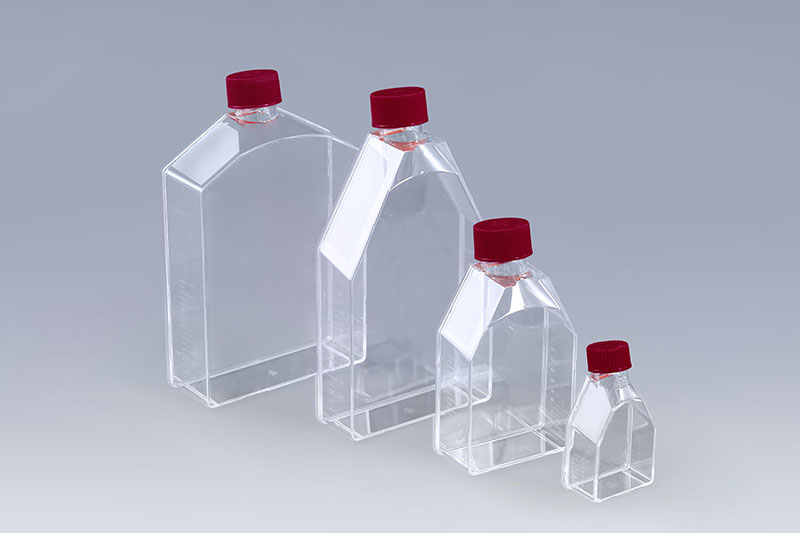 Cell Culture Flasks
2. DNase/RNase-free: Cell growth has relatively high environmental requirements and needs to be carried out under suitable temperature, osmotic pressure, PH and other conditions. DNase-free and RNase-free means that the cell culture consumables have been specially sterilized. Treatment eliminates various factors that hinder cell growth. Electron beam irradiation sterilization is a commonly used sterilization method for consumable products.
3. Surface treatment: Most animal cells need to be attached to a solid interface to grow, and cells can only attach to a hydrophilic solid interface. Currently, most of the cell cultures on the market are adherent cells. In order to increase the adhesion properties of the surface of cell consumables and make them suitable for cell attachment and growth, these consumables will undergo special surface modification treatments to enhance their hydrophilicity. Cell consumables after surface modification are generally suitable for the cultivation of suspension cells.
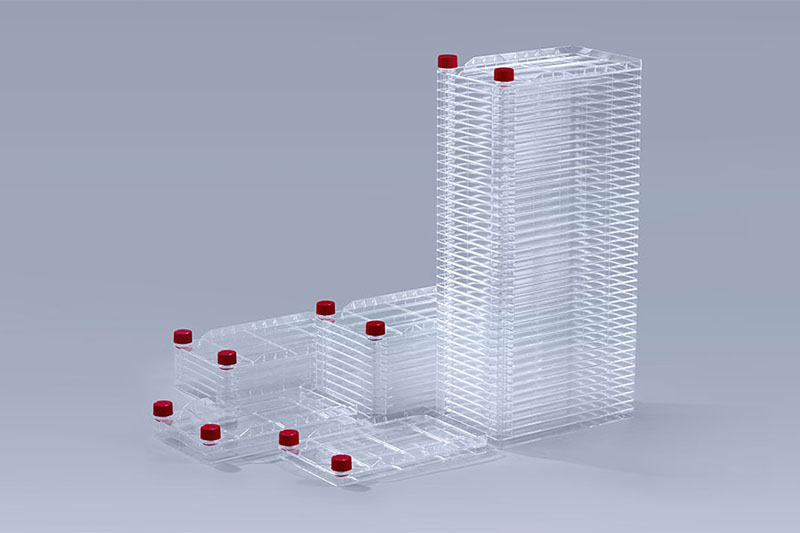 Cell Factory Systems
Only products that meet market demand will be more competitive. High transparency, no DNase/RNase, and surface treatment are some of the basic features of cell culture consumables. These features are also designed to promote better cell growth and reproduction.
The FAI climbed 5.9 percent year-on-year in the first 11 months of 2018, quickening from the 5.7-percent growth in Jan-Oct, the National Bureau of Statistics (NBS) said Friday in an online statement.
The key indicator of investment, dubbed a major growth driver, hit the bottom in August and has since started to rebound steadily.
In the face of emerging economic challenges home and abroad, China has stepped up efforts to stabilize investment, in particular rolling out measures to motivate private investors and channel funds into infrastructure.
Friday's data showed private investment, accounting for more than 60 percent of the total FAI, expanded by a brisk 8.7 percent.
NBS spokesperson Mao Shengyong said funds into weak economic links registered rapid increases as investment in environmental protection and agriculture jumped 42 percent and 12.5 percent respectively, much faster than the average.
In breakdown, investment in high-tech and equipment manufacturing remained vigorous with 16.1-percent and 11.6-percent increases respectively in the first 11 months. Infrastructure investment gained 3.7 percent, staying flat. Investment in property development rose 9.7 percent, also unchanged.