 English



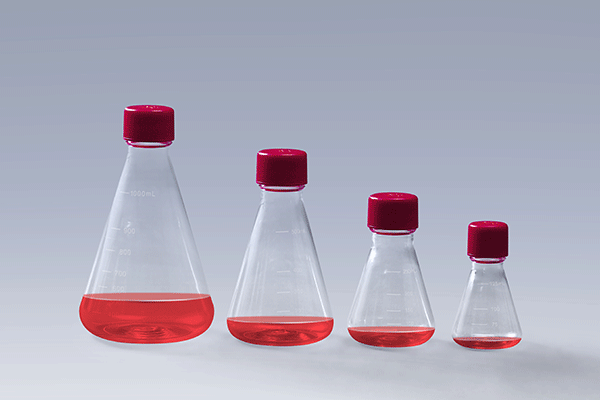
Shake flasks are widely used in laboratories for cultivating microorganisms and suspension cells. Although operational parameters such as shaking speed and working volume are important, the design of the flask itself also plays a significant role in culture performance. The structure and materials used in an Erlenmeyer Shake Flask can influence mixing behavior, oxygen transfer, and overall cell growth.
Understanding how Erlenmeyer Flask design affects culture conditions helps researchers select suitable vessels for reliable and reproducible experiments.
The Importance of Flask Geometry
The classic conical shape of the Erlenmeyer Flask is not accidental. Its wide base and narrow neck create a unique mixing pattern during orbital shaking. As the Erlenmeyer Shake Flask moves on a shaker platform, the liquid forms a rotating wave along the inner wall of the flask.
This motion increases the surface area between the culture medium and air, improving oxygen transfer while maintaining gentle mixing. Compared with straight-walled containers, the conical geometry helps prevent splashing and supports more stable suspension of cells and microorganisms.
Neck Design and Gas Exchange
The narrow neck of an Erlenmeyer Shake Flask also contributes to culture stability. A reduced opening helps minimize evaporation and contamination risks during long cultivation periods.
In addition, the neck structure allows different cap configurations. Many modern Erlenmeyer Flasks are equipped with vented caps containing breathable membranes. These membranes allow gases such as oxygen and carbon dioxide to pass through while maintaining sterile conditions inside the flask.
Efficient gas exchange is especially important for aerobic microorganisms and high-density cultures that require consistent oxygen supply.
Flask Size and Surface Area
Flask size affects the relationship between liquid volume and available headspace. Larger Erlenmeyer Shake Flasks typically provide greater air space above the culture medium, which supports oxygen transfer during shaking.
However, flask size must be matched with the correct working volume. Overfilling an Erlenmeyer Flask reduces aeration and limits the mixing efficiency that the conical design is meant to provide.
Proper pairing of flask size and working volume helps maintain consistent cell growth conditions.
Material Selection and Culture Compatibility
Traditional laboratory Erlenmeyer Flasks are often made from glass, while modern shake flasks are increasingly produced from polymer materials such as PETG or polycarbonate (PC).
Plastic Erlenmeyer Shake Flasks offer several advantages for cell culture applications:
High optical clarity for visual observation
Lower risk of breakage
Compatibility with sterile single-use workflows
Consistent manufacturing dimensions
These features are particularly valuable in laboratories working with sensitive cell cultures or large numbers of parallel experiments.
Cap Design and Aeration Control
Cap configuration is another design factor that influences culture performance. Two common options are seal caps and vent caps.
Seal caps provide tight closure and are often used during media preparation or storage. Vent caps, on the other hand, are designed to allow gas exchange while maintaining sterility. For many aerobic cultures, using a vented Erlenmeyer Shake Flask can significantly improve oxygen availability and support stronger cell growth.
Selecting the appropriate cap type depends on the specific requirements of the experiment.
Consistency in Flask Manufacturing
Even small variations in flask shape, wall thickness, or cap fit can influence fluid dynamics during shaking. High-quality Erlenmeyer Flask manufacturing helps ensure consistent mixing patterns and reproducible culture conditions across experiments.
For laboratories conducting process development, fermentation studies, or cell culture research, using well-designed Erlenmeyer Shake Flasks contributes to stable experimental performance and easier scale-up to larger systems.
Conclusion
The design of a shake flask has a direct impact on the culture environment. Factors such as conical geometry, neck structure, material choice, cap design, and manufacturing consistency all influence how an Erlenmeyer Shake Flask performs during cultivation.
By understanding how Erlenmeyer Flask design affects mixing and aeration, researchers can select appropriate culture vessels and establish more reliable conditions for microbial fermentation and cell suspension culture.
The FAI climbed 5.9 percent year-on-year in the first 11 months of 2018, quickening from the 5.7-percent growth in Jan-Oct, the National Bureau of Statistics (NBS) said Friday in an online statement.
The key indicator of investment, dubbed a major growth driver, hit the bottom in August and has since started to rebound steadily.
In the face of emerging economic challenges home and abroad, China has stepped up efforts to stabilize investment, in particular rolling out measures to motivate private investors and channel funds into infrastructure.
Friday's data showed private investment, accounting for more than 60 percent of the total FAI, expanded by a brisk 8.7 percent.
NBS spokesperson Mao Shengyong said funds into weak economic links registered rapid increases as investment in environmental protection and agriculture jumped 42 percent and 12.5 percent respectively, much faster than the average.
In breakdown, investment in high-tech and equipment manufacturing remained vigorous with 16.1-percent and 11.6-percent increases respectively in the first 11 months. Infrastructure investment gained 3.7 percent, staying flat. Investment in property development rose 9.7 percent, also unchanged.