



In veterinary vaccine production, cell culture roller bottles are a commonly used cell culture vessel for the expansion and production of viral or bacterial cultures required for vaccines. It mainly involves the following links:
Cultivation of cell lines: Cell culture roller bottles can be used to grow cell lines that act as hosts for viruses or bacteria and produce the antigens required for vaccines. By providing appropriate cell culture media and growth conditions in the flask, cells can attach and proliferate.
Virus Culture: Cells in the bottles can be infected and used for virus culture. Virus strains can be added to cell culture media to infect cells and replicate inside them. Over time, the number of viruses increases, and virus particles can be collected from cells and used to make vaccines.
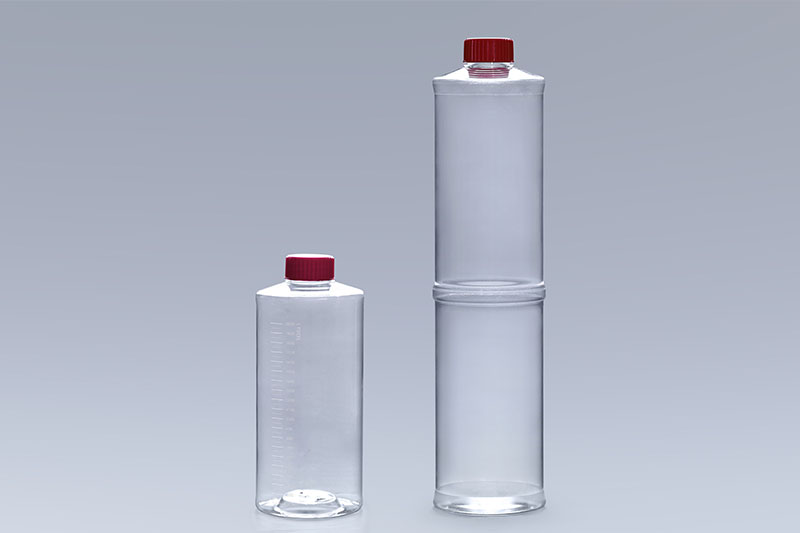 Cell Culture Roller Bottles
Vaccine preparation: After virus cultivation, cell and virus cultures in cell culture roller bottles can be used for vaccine preparation. Viral particles can be collected and isolated from cell culture media. Then, after proper treatment and processing, it can be prepared into vaccine products and supplied to animals for vaccination.
Viral Amplification: In some cases, this vessel can also be used for viral amplification. Virus amplification refers to the inoculation of initial virus strains into cell culture roller bottles, through multiple passages and multiplications, to increase the number and yield of viruses.
The common specifications of cell culture roller bottles are 2L and 5L, and the culture area is relatively large, which can provide more attachment area and proliferation space for cells. In addition, the rotation of the spinner during cultivation can promote gas exchange and provide a suitable growth environment for cells. These excellent characteristics make it a commonly used cell culture vessel in the production of veterinary vaccines.