 English



With the rapid advancement of biotechnology, cell culture has become an indispensable component of scientific research and industrial production. Alongside these developments, the tools used for cell culture are also continuously evolving. Among them, plastic cell culture roller bottles are increasingly becoming the preferred choice for researchers and manufacturers due to their distinctive advantages.
Innovative Materials: Transforming Cell Culture Practices
The emergence of plastic cell culture roller bottles marks a significant transition from traditional glass containers to more modern and user-friendly plastic materials. Compared with conventional glass bottles, plastic roller bottles offer easier handling, enhanced durability, and excellent biocompatibility. They are particularly well suited for large-scale cultivation of animal and plant cells, bacteria, and viruses.
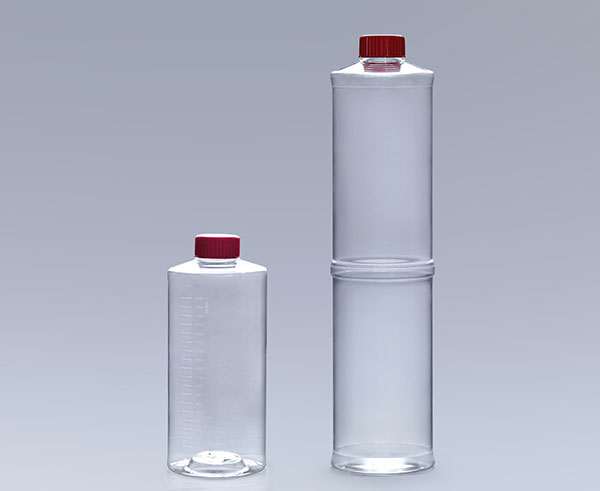
2L TC treated cell roller bottles
User-Friendly Design: Improving Operational Efficiency
Ease of use is one of the key advantages of plastic cell culture roller bottles. Unlike glass bottles, plastic bottles do not require complex cleaning and sterilization procedures and are ready for use directly out of the package. This significantly reduces preparation time, minimizes the risk of operational errors, and provides researchers with a more efficient and convenient working environment.
Optimized Cell Growth: Ensuring Reliable Experimental Results
The surface of plastic roller bottles is typically treated—such as with tissue culture (TC) treatment—to promote effective cell attachment, growth, and proliferation. Compared with glass bottles, which may introduce chemical residues during repeated cleaning processes, plastic bottles provide a more stable and consistent culture environment. This stability helps improve experimental accuracy and enhances the reproducibility of results.
Safe and Reliable: Enhancing Laboratory Safety
Plastic cell culture roller bottles offer excellent resistance to breakage. Compared with fragile glass bottles, they significantly reduce safety risks in the laboratory and help avoid unnecessary costs caused by accidental breakage. The use of high-performance polymer materials allows researchers to focus more on scientific outcomes rather than concerns over container fragility.
Conclusion
Plastic cell culture roller bottles demonstrate clear advantages in modern biological laboratories, including ease of operation, improved cell culture performance, superior impact resistance, and enhanced safety. As an important tool supporting the advancement of biotechnology, they not only accelerate laboratory research but also provide reliable solutions for large-scale industrial production—injecting greater possibilities into the future development of life sciences.
The FAI climbed 5.9 percent year-on-year in the first 11 months of 2018, quickening from the 5.7-percent growth in Jan-Oct, the National Bureau of Statistics (NBS) said Friday in an online statement.
The key indicator of investment, dubbed a major growth driver, hit the bottom in August and has since started to rebound steadily.
In the face of emerging economic challenges home and abroad, China has stepped up efforts to stabilize investment, in particular rolling out measures to motivate private investors and channel funds into infrastructure.
Friday's data showed private investment, accounting for more than 60 percent of the total FAI, expanded by a brisk 8.7 percent.
NBS spokesperson Mao Shengyong said funds into weak economic links registered rapid increases as investment in environmental protection and agriculture jumped 42 percent and 12.5 percent respectively, much faster than the average.
In breakdown, investment in high-tech and equipment manufacturing remained vigorous with 16.1-percent and 11.6-percent increases respectively in the first 11 months. Infrastructure investment gained 3.7 percent, staying flat. Investment in property development rose 9.7 percent, also unchanged.